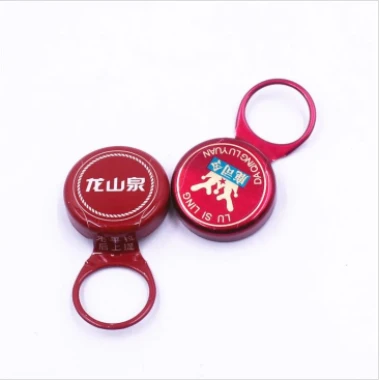


Do wine bottle cap covers affect the carbonation in sparkling wines? That's a question I've been asked a bunch of times as a supplier of Wine Bottle Cap Covers. And it's a pretty important one, especially for all you sparkling wine lovers out there.
Let's start by understanding what carbonation in sparkling wines is all about. Carbonation is basically the presence of carbon dioxide (CO2) gas in the wine. This gives the wine its characteristic fizz and bubbles. Sparkling wines get their carbonation through a secondary fermentation process. During this process, yeast consumes sugar and produces alcohol and CO2. The CO2 gets trapped in the bottle, creating pressure and those lovely bubbles we all enjoy.
Now, let's talk about wine bottle cap covers. There are different types out there, like the Beer Cap with plastic grip, 3060mm Black Aluminum Bottle Caps, and Bottle Screw Cap. Each type has its own features and functions, but the main goal is to seal the bottle and keep the wine inside fresh.
So, do these cap covers affect the carbonation? Well, the short answer is yes, they can. A good quality cap cover is designed to create an airtight seal. This is crucial because if the seal isn't tight, the CO2 can escape from the bottle. Once the CO2 starts to leak out, the carbonation level in the wine will decrease over time. You'll notice fewer bubbles and a less fizzy taste.
Let's take a closer look at how different types of cap covers can impact carbonation.
Aluminum Caps
Aluminum caps are quite popular for sparkling wines. They're strong and can provide a good seal. The 3060mm Black Aluminum Bottle Caps are a great example. These caps are usually crimped onto the bottle neck, creating a tight fit. The crimping process ensures that the cap stays firmly in place and prevents the CO2 from escaping easily. However, if the cap isn't crimped correctly or if there are any defects in the cap or the bottle neck, it can lead to a poor seal and loss of carbonation.
Screw Caps
Screw caps, like the Bottle Screw Cap, are becoming more common in the wine industry. They're easy to use and can provide a reliable seal. When you screw the cap on tightly, it forms a barrier that keeps the CO2 inside the bottle. But, just like with aluminum caps, if the cap isn't screwed on properly or if the threads are damaged, the seal can be compromised, and the carbonation can be affected.
Caps with Plastic Grip
The Beer Cap with plastic grip might seem more like a beer cap, but they can also be used for some types of sparkling wines. The plastic grip helps to create a better seal by providing extra friction. This can be beneficial in preventing the cap from coming loose and allowing the CO2 to escape. However, the quality of the plastic and the design of the grip are important factors. If the plastic is too soft or the grip isn't well-designed, it might not provide a strong enough seal.
Another thing to consider is the storage conditions of the wine. Even with a perfect cap cover, if the wine is stored in the wrong conditions, it can still lose its carbonation. For example, if the wine is stored at a high temperature, the pressure inside the bottle can increase, which might cause the cap to loosen or even pop off. Also, if the wine is shaken or jostled too much, it can disrupt the CO2 bubbles and lead to a loss of carbonation.
So, as a supplier of Wine Bottle Cap Covers, I know how important it is to choose the right cap for your sparkling wine. You want a cap that will provide a tight, reliable seal to keep the carbonation intact. That's why we offer a wide range of high-quality cap covers, including the ones I've mentioned above.


If you're a winemaker or a distributor looking for the best wine bottle cap covers to preserve the carbonation in your sparkling wines, we'd love to talk to you. Our team has a lot of experience in the industry and can help you find the perfect cap for your needs. Whether you need a large quantity for commercial production or a small batch for a special project, we've got you covered.
Contact us to start a conversation about your requirements. We're here to work with you to ensure that your sparkling wines maintain their delicious fizz and bubbles from the moment they're bottled until they're opened and enjoyed.
References
- Jackson, H. (2019). The Science of Wine. Wine Press.
- Smith, L. (2020). Wine Packaging and Preservation. Beverage Journal.